[Chasers] 
Traveling with alcohol enthusiasts

By Sam Ujvary
Irish Invasion

Just about every country, culture and religion has contributed something to our society as a whole. Celebrations surrounding jolly old St. Nick are long-standing traditions with roots in the Germanic mid-winter Yule celebration. Greek influence played an intricate role in the popularity of horoscopes around the world. Modern baseball of the U.S. is now just as popular in Cuba, Japan and the United Kingdom. Of all the gifts that specific regions have shared with the rest of the world, perhaps the most popular, is the global invasion of the Irish pub. 

No matter where in the world you travel, you’re almost certain to stumble upon Ireland’s most precious gift. While this may have something to do with the extensive emigration from Ireland tracing back to the 19th century, it certainly has everything to do with the welcoming environment one feels when entering an establishment. The friendly ambiance of camaraderie when you walk into an Irish pub makes you feel like it’s your frequented neighborhood bar, even if it’s 10,000 miles away from home. It’s never just about drinking—it’s like stepping into an episode of Cheers. A lot of pubs get a mix of locals and tourists alike who visit for a pint, and are often the search results for Americans living and traveling abroad.

Over the course of many years, the pub has become so widely known for its authenticity that companies have been established specifically for the niche market. For generations, cities in Ireland have crafted pubs and shipped them all over the world. After all, who knows how to better build an Irish drinking establishment than a group of Irishmen themselves? These manufactured pubs have become wildly popular, and companies have exported more than just a few slabs of wood and a place to grab a beer—they’ve exported centuries of tradition, and more importantly, a place where everybody knows your name.

Here's to you.
0 comments
Last week, one of the other editors and I traveled to Atlanta. While there, we got to dabble in many southern dishes, but the restaurant that stands out the most is Sweet Georgia’s Juke Joint. Located at 200 Peachtree St NE, this southern gem is downtown and just a stone’s throw away from AmericasMart Atlanta.

Juke joints were created after the Emancipation Proclamation in 1863. They became a center for rural laborers to unwind after a hard day at work. They popped up all over the Southeast because Jim Crow laws forbade African-American workers from convening in white establishments. Juke joints were known for their rowdiness and their moonshine. Despite being frowned upon, they gave African-Americans a place to loosen up and eventually helped them gain a voice. One of the most influential aspects of these southern watering holes was their music. Ragtime and dance music of the late nineteenth century began in these establishments. Soon after that, the blues, barrel house, and the slow drag dance music of the rural south began to emerge. Sweet Georgia’s Juke Joint brings the city a place to relax while enjoying live entertainment and exceptional cuisine.

The music-centric restaurant also features a wooden dance floor, stage for live music, and state-of-the-art video screen for guests' entertainment. It’s spacious private dining room offers guests a view of the stage and live musical performances.

The soul food offerings at Sweet Georgia’s Juke Joint are both vast and delicious. Guests are encouraged to start their dinner with Crawfish Bruschetta, Crispy Crawfish Tails, or one of the other southern appetizers. The Crawfish Bruschetta is flavorful crawfish stew served on thick herb butter toast. Three slowly smoked meats are offered; wings, pulled pork, and a St. Louis pork rib rack. A number of other evening plates can also be found on the menu. Try the Jambalaya Pasta for a spicy kick or the Shrimp and Grits for a hearty, flavorful dish. Whatever you order, make certain you come hungry (servings are big) and be certain to try the Seafood Gumbo.

0 comments

[Chasers] 

Traveling with alcohol enthusiasts 


©Marlene Rossman 2014
Contributing Editor –Chef Magazine

Put a Chardonnay in your Day

White wine enthusiasts love a chilled glass of big, buttery California Chardonnay, especially when the temperature rises. But let’s venture out of our comfort zone and try some Chards from other places. You will be amazed how the same grape tastes different when grown in other places and made into wine by different techniques. A number of wineries, including some in California, ferment their Chards in steel rather than oak, giving them a leaner, less voluptuous taste profile. Try Morgan Winery’s Metallico Chardonnay.

Parlez-vous français?
France is the original home of the Chardonnay grape, but you will rarely see the word ”Chardonnay” on the label of a French bottle. France’s most famous Chardonnays come from the Burgundy region, so any white wine that says Burgundy is a Chard! Joseph Drouhin produces marvelous white Burgundy. Chablis is the most northern part of Burgundy with its own special character. The wines are stony, austere and refreshing, and are called Chablis, not Chardonnay. If you are not too confused by this time, try a glass with a cold seafood salad. William Fèvre Chablis is one to look for.

The U.S of (chardonn)ay
California Chardonnay may be the most famous, but many other places in the United States produce delicious Chardonnay. Oregon, with its cool climate, produces Chards that are more in the restrained French style. In fact the climate is so similar to Burgundy that the Drouhin family produces Chardonnay both in France and Oregon! Washington State also makes cool climate Chardonnay, but it is riper than neighboring Oregon. Chateau Ste. Michelle produces a variety of Chardonnays in different styles that are all excellent. If you are looking for Chard on the East coasts, New York’s North Fork of Long Island has recently begun to turn out world class Chardonnay. Macari Vineyards produces two different styles of Chardonnay, both well worth sipping.

South of the equator
In South America, both Argentina and Chile are turning out some fine Chardonnay. Two to look for are Zuccardi SantaJulia Chardonnay from Argie and Concha y Toro Chard from Chile, and further south yet, Australia produces lovely Chardonnays in a variety of styles. Try Lindenman’s and Hardy’s offerings. South Africa, which exports over 400 million liters of wine, is another good source of Chardonnay. Over the past few years, a growing number of South African women, both black and white, have begun to produce Chardonnay (and other good wines). One South African Chard that is easy to find in the States is made by the Glen Carlou.

Surprising to some, Israel has been producing quality wines since the 1990s. Israel’s climate resembles California, and there are a large number of wineries, some of them “boutique,” that produce high quality Chardonnay. Domaine duCastel is one of the cult  wineries, and Yarden Winery even makes an organic Chard. Since many Champagnes and sparklers are made from Chardonnay, finish your world tour by enjoying a glass of bubbly!
0 comments

[Celebrating America] 

Favorite beverage pairings for your 4th of July cookouts
By Sam Ujvary

"In the truest sense, freedom cannot be bestowed; it must be achieved."
-Franklin D. Roosevelt

It's Friday, you've got the day off, and you're planning on celebrating America with 150 of your closest friends at a cookout. This is the life. There's almost certainly a plethora of food resting on a red, white and blue tablecloth-covered picnic table calling your name. Burgers, hot dogs, brats and (hopefully) anything wrapped in bacon. Pairing your full plate with the perfect drink to offset the flavors is going to take a minute. Don't overlook it. You've allowed the Grill Master to design the perfect dish for you, now let your inner mixologist work in perfect harmony to create some great flavor associations. Below are my choices to pair with whatever you've got on that American-sized paper plate.

Hamburgers/cheeseburgers/veggie burgers/hot dogs/brats: Lemonade-based beverages are going to be lighter and will offset the heavy meat. One of my favorites is a blackberry basil lemonade. Muddle 4-5 blackberries, 2 lemon wedges and about 6 leaves of basil. Pour 1.5 ounces of Tito's Vodka over ice and top with the muddled mix, followed with fresh lemonade.

Steaks and bacon dishes: The Old Fashioned has a slightly fruity flavor that already pairs well with the drink's dominant whiskey. It provides a little sweetness that will go nicely with any thick cut of meat. Soak a sugar cube (or 1 packet) in 3 dashes of bitters and muddle with an orange slice and 1 cherry. Add ice, and stir in 1.5 ounces of Basil Hayden's.

Chicken: Any kind of chicken; fried, grilled, or baked will go flawlessly with a Mojito or Caipirinha. Caipirinhas are native to Brazil and are made with Cachaça, which is a sugar cane liquor, while Mojitos are made with white rums and have mint and club soda. I often like to add fresh fruits to mine, either pineapple or strawberry. For a Mojito, muddle a pineapple slice, 3 lime wedges and about 10 mint leaves with 1.5 ounces of Bacardi. pour over ice and top with club soda. For a Caipirinha, muddle a pineapple slice with 3 lime wedges and a sugar cube. Pour in 1.5 ounces of Leblon and enjoy over ice. Any herbs on your chicken dish will be a perfect palate pair.

Fruit salad: Grapes, watermelon and strawberries may be the route you decide to go while rooftop-hopping today. If that's the case, champagne and drier wines will be an essential pair. The fruit will bring out the flavors of the wines.

Corn on the cob/potato and pasta salads: Let's face it—the side dish is there to complement the meat of the meal. But if you're enjoying only a plate full of side dishes (no judgement here), get a little refreshment with this beverage. Pour 1.5 ounces of Cîroc Red Berry over ice, and top it with San Pellegrino Limonata.

As always, please enjoy these pairings responsibly, and have a safe and happy Fourth!

Here's to you, America.
0 comments

Celebrate Small Town USA and the dining establishments, chefs and menu items that make these communities so irreplaceable. This summer, General Mills Foodservice is kicking off the Neighborhood to Nation Recipe Contest, a competition challenging and celebrating the one-of-a-kind dishes at independent family dining or neighborhood restaurants. They’re calling on these independent restaurants to spotlight and submit a favorite recipe for the chance to win up to $50,000 ($40,000 cash plus a $10,000 donation to give back to a local charity).

From Aug. 1 through Sept. 30, 2014, restaurants may submit their favorite original breakfast, entrée or dessert recipes or create a new special dish that uses at least one ingredient from General Mills’ list of eligible products. Three category winners will be selected, from which, two will each be awarded a $10,000 first prize, and one will earn the Grand Prize. 

Intended to inspire culinary creativity, the Neighborhood to Nation recipe contest is open to foodservice operators, chefs and line cooks at independent family dining or “neighborhood” restaurants.

“We are inspired by the local flavor our customers cook up every day in neighborhoods across the country, and [we] look forward to celebrating these one-of-a-kind dishes with the Neighborhood to Nation Recipe Contest,” says Grace Gilbertson, senior marketing manager for General Mills Foodservice.  “Recognizing the strong connection these neighborhood establishments have in their communities, we are particularly thrilled to award our Grand Prize winner an additional $10,000 to share with a local charity.”

The recipe contest also offers operators an opportunity to experiment with high quality and consistent products from General Mills as well as exclusive access to trend information, insights and ideas to help them differentiate their menus and delight their diners. Entries will be judged based on taste, appearance, creativity, and foodservice viability. The top 15 finalists and recipes will be announced in February, 2015, and the three Recipe Category Winners will travel to General Mills’ headquarters in March for a day of celebration and culinary inspiration along with the announcement of the official Grand Prize winner.

RULES:
Recipe submissions must include at least one ingredient from one of General Mills Foodservice’s participating brands: Pillsbury (biscuits), Gold Medal (baking mixes) and Yoplait (yogurt).  Entrants can receive  one $20 rebate for each recipe submission, up to a maximum of one rebate per participating brand during the entry period.  The recipe contest ends Sept. 30, 2014. For more information on eligibility, complete contest details and official contest rules, independent family restaurants should contact their General Mills Foodservice sales representative at 800/215-6120 or visit www.NeighborhoodtoNation.com.

0 comments

[Trademasters] 

Profiling leaders of the pack


 By Sam Ujvary

Rockmill Brewery


Nestled in central Ohio near the Hocking River, Lancaster's Rockmill Brewery rests on 11 acres of land that was once a farm. The grandson of an Ohio winemaker, Matthew Barbee founded the brewery four years ago. Rockmill is lucky enough to have a natural spring on its property, so they take the water used in their beers straight from the ground. I caught up with Phil Blundred, brewer at Rockmill, to find out a little more about the company.

Tell me a little about the brewery. The Brewery was founded in September, 2010. We hold Brewery tours on the weekends during our tasting room hours. Our tours are a bit impromptu. We ask our tasting room patrons if they would like to see our operation, and if enough people say yes, grab a beer and lets take a tour! Not having a food license, we encourage people to bring their own picnic, relax, and enjoy the property. We have an excellent relationship with well respected delis and specialty grocery stores in Columbus that will help guide our patrons in choosing the proper food pairing to accompany our beers. We host music events for both local and traveling artists from all over the world. Beer release gatherings, weddings and smaller events to groups that rent the space for private parties.

How long have you been brewing beer and how did you get into it? I've been brewing and distilling professionally for almost 5 years, and started with Rockmill in August of 2013. I was part of an apprenticeship with Middle West Spirits for 6 months when I first started in the alcohol production trade in late 2009, early 2010. For a couple years following, I operated as head of production and 2nd Distiller until late 2012. I later continued my career as a distiller in Kansas City, Missouri for one year until I was offered a position as a brewer with Rockmill.


How many brews do you have? Where do you distribute? We currently have Five beers that are offered year round. All the beers are Belgian style, and we do offer seasonal beers as well as limited release and collaboration beers with other local breweries. The mineral content of the well in which we use to brew is ideal for Belgian style ales, so we won't stray from this particular style of beer. Our distribution spans the state of Ohio, Northern Kentucky, and New York City, with more to come.

To find out more about the beer, the history, and the breathtaking scenery, visit the Rockmill Brewery website. You can also follow them on Instagram.


0 comments

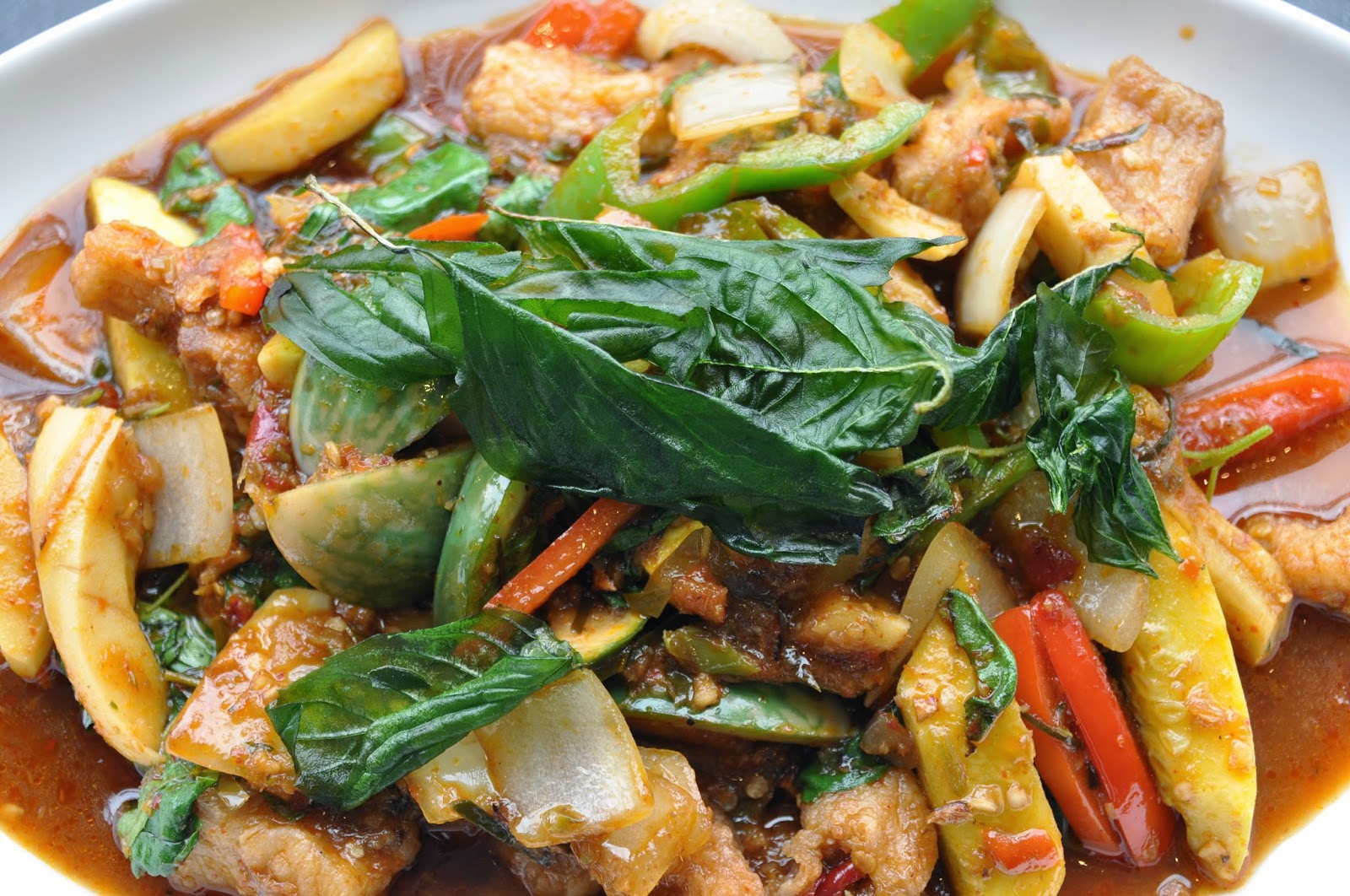
Asian food continues to be a major player throughout the country. In honor of National Catfish Day on Wednesday, June 25, we want to share a Thai twist on catfish that was created by Executive Chef/ Partner Jet Tila at Pakpao in Dallas.


Pakpao is located in the Dallas Design District and features unique Thai dishes, along with classic favorites from all across Thailand’s diverse cultural and gastronomic regions. Pakpao recently announced its partnership with Celebrity Chef Jet Tila, son of America’s first Thai family, best known for his appearances on Cutthroat Kitchen, Iron Chef America, and Anthony Bourdain’s No Reservations. 

 
Cat Fish Red Curry
Pla Dook Pad Phet
By Executive Chef/Partner Jet Tila, Pakpao

3-4 T. oil
1-2 oz. of canned red curry paste (Maesri brand)
2 T. gingerroot (young ginger), finely chopped
1 strand of pickled green peppercorns, picked and finely chopped
1 T. fresh lemongrass, finely chopped
1 T. galangal, peeled and finely chopped
2 T. kaffir lime leaves, thin chiffonade
2 T. white sugar
2 T. fish sauce
2 T. water plus more if needed
1 catfish fillet cut into 1/2 in cubes lightly dusted in rice flour
2 Thai eggplant, cut into quarters
1/2 yellow squash, bias sliced
1 Anaheim pepper, ¼” sliced on a bias
1/2 small yellow onion, thinly sliced
½ cup canned bamboo sliced shoot
1 oz. white wine
½ Cup loosely packed thai sweet basil


Method:


For Curry:

1.       In a large pot add oil and heat on med high, add curry paste and fry for 1-2 min.  Stir well as the curry fries in oil and becomes very fragrant. 

2.       Add remaining ingredients except sugar, fish sauce and water. Stir and allow the sauce to reduce so it coats the back of a spoon. Turn down heat and add sugar and fish. Add water if the sauce is too thick. Taste for seasoning reserve and allow to cool. 


To Assemble:

1.       In a cast iron skillet, or heavy bottomed pot fry catfish in 1 in enough oil to cover, at 370 degrees for about 5 minutes or until fish is crispy.

2.       Remove from oil and reserve with vegetable prep for dish. In a flat bottomed wok or large sauté pan add 2 Tbsp. of oil and heat until lightly smoking. Add vegetables and sauté for 2-3 minutes continuously moving vegetables.

3.       Deglaze pan with 1 oz. of white wine and add 1/4 c of water to steam and further cook vegetables. 

4.       Next, stir in enough pad phet curry to make a smooth sauce with water (approximately 3 oz).

5.       Pour the stirfry curry sauce and vegetables over reserved catfish and garnish with thai basil.
0 comments

For National Catfish Day (Wednesday, June 25) we want to take you south to Brennan's of Houston. Chef Danny Trace utilizes catfish to create dishes which embody Brennan’s of Houston’s signature “Texas Creole” cuisine. In his Catfish Courtouillon dish, utilizes Creole spiced shrimp, Acadian style Courtbouillon sauce with a side of toasted garlic Jazzmen rice.

Catfish Courtbouillon
Recipe by Chef Danny Trace at Brennan’s of Houston

Serves 4

Ingredients:
4 each Catfish filets (6 oz.)
8 each Jumbo shrimp
2 oz. Grapeseed oil
2 each Roma Tomatoes
1 T. Garlic, minced
3 ½ oz. Fennel (Julienne)
4 oz. Green Bell Pepper (Julienne)
4 oz. Onions, white (Julienne)
3 ½ oz. Celery (Julienne)
¼ C. Steen’s Molasses
½ C. Crystal Hot Sauce
1/3 C. Worcestershire Sauce
4 C. Shrimp stock
4 each Bay leaves
1 pinch Saffron
2 each Lemon
4 leaves Basil, chiffonade
To taste salt and pepper
To taste Creole seasoning

 
Method:

Pre-heat oven to 400. In a medium-size bowl, toss together fennel, bell peppers, celery, onion and 1 oz. of grape seed oil, season with salt and pepper. Arrange on baking tray and place in oven. Roast for 10 minutes.

Cut tomatoes in half, length-wise, and place on a baking tray skin side up. Drizzle 1oz. of grape seed oil and season with salt and pepper. Roast in oven for 8-10 minutes, or until the skin starts to blister. Once cooled remove skin and Julienne the tomatoes.
0 comments


[Tequila (book)Worm] 

Adult Beverage Education

By Sam Ujvary

Prohibition

"When I sell liquor, it's called bootlegging; when my patrons serve it on Lake Shore Drive, it's called hospitality."
-Al Capone

What is it about wanting something you know you can't have? And does it apply in every aspect of our lives? Prohibition was, as it is often referred, a noble experiment. It consisted of a nearly 14-year period from 1920-1933 where the manufacturing and selling of alcohol became illegal. Which begs the question: would the Roaring Twenties have been just as roaring had the Eighteenth Amendment never been established? 
In the earlier years of the 20th century, more than just the U.S. experienced this enforcement of abstaining from alcohol. The Soviet Union, Iceland, Norway and the Hungarian Soviet Republic are just a few countries who also nobly attempted this. Meanwhile, distilleries and breweries in the areas surrounding the U.S. flourished. Canada, Mexico and the Caribbean were having visiting Americans consume their alcohol or were exporting it illegally to the U.S. After a while, alcohol was abundantly arriving into the country under the radar. This is where one of Chicago's most notorious gangsters also flourished.
Bigger cities were completely defying the new laws set in place, brewing and distilling alcohol in homes, utilizing rumrunners, and opening speakeasies. Enter, Al Capone. With hundreds of men at his beck and call and money to go around, Capone and other gangsters alike were able to continuously grow illegal liquor rings with little-to-no consequences. Prohibition agents were being paid very little, which made bribery a most useful weapon for the new breed of criminals. 
While the physical consumption of alcohol was never a violation of the original amendment, the country spent a decade looking for loopholes and blatantly ignoring laws. Even considerably 'good' people were breaking laws. The stock market crashed at the tail end of the century and the Great Depression hit the country like a ton of bricks. People needed to work and the U.S. needed to get on its feet again. A few years later, at the end of 1933, the 21st Amendment was ratified, making the 18th Amendment the first and only Amendment to this day to be repealed. 
Think about where we would be if it weren't for that 21st Amendment. In my opinion, there'd be a lot more angry people, more speakeasies in a 2-mile radius than you could count, and, the brewery responsible for creating my go-to summer beverage would have had to come up with a different name: 21st Amendment Brewery's Hell or High Watermelon.

Here's to you.

0 comments